Sri Lanka’s traditional handicrafts and artistic heritage reflect centuries of creativity, craftsmanship, and cultural identity. From intricate mask carving and batik making to handloom weaving, pottery, wood carving, and brasswork, these timeless traditions preserve the island’s rich artistic legacy.



Sri Lankan Handicrafts and Traditional Arts
Sri Lanka is a land rich in artistic heritage, where traditional craftsmanship has been passed down through generations. These handcrafted arts are more than decorative creations—they are expressions of culture, storytelling, religion, and community identity.
Across the island, artisans continue to preserve ancient techniques in weaving, carving, painting, pottery, and ceremonial crafts.
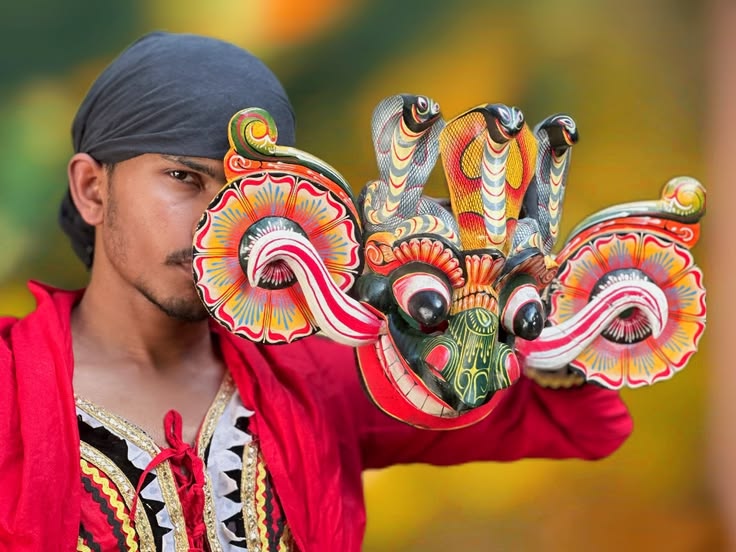
Traditional Mask Making
Sri Lanka’s traditional mask-making heritage is one of its most recognizable artistic traditions.
These colorful handcrafted masks are historically linked to:
- Folk performances
- Healing rituals
- Cultural ceremonies
- Storytelling traditions
Mask categories include:
- Raksha masks
- Kolam masks
- Sanni masks
Ambalangoda is the most famous center for this traditional art.
📍 Location: Ambalangoda
Batik Art
Sri Lankan batik combines wax-resist dyeing techniques with vibrant artistic design.
Popular batik products:
- Clothing
- Sarees
- Wall art
- Decorative textiles
- Fashion accessories
Modern Sri Lankan batik blends traditional craftsmanship with contemporary creativity.
📍 Popular in: Colombo / Kandy / Southern Sri Lanka
Handloom Weaving
Sri Lanka’s handloom tradition is deeply rooted in rural craftsmanship.
Handwoven textiles include:
- Sarees
- Home décor fabrics
- Table runners
- Scarves
- Traditional clothing materials
Handloom products are valued for their craftsmanship and authenticity.
Wood Carving
Sri Lankan wood carving is a centuries-old tradition found in temples, homes, furniture, and decorative art.
Popular carvings:
- Religious sculptures
- Traditional furniture
- Decorative panels
- Temple architecture
- Cultural ornaments
The craftsmanship showcases remarkable detail and artistry.
Pottery Making
Traditional pottery remains an important part of village craftsmanship.
Common handmade pottery includes:
- Clay cooking pots
- Decorative vessels
- Water storage pots
- Traditional household items
Pottery reflects sustainable living and practical cultural heritage.
Brass and Metal Crafts
Sri Lankan artisans are also known for beautiful metalwork.
Examples:
- Brass lamps
- Religious items
- Decorative objects
- Ritual artifacts
- Traditional household ornaments
These crafts often feature detailed engraving and heritage design.
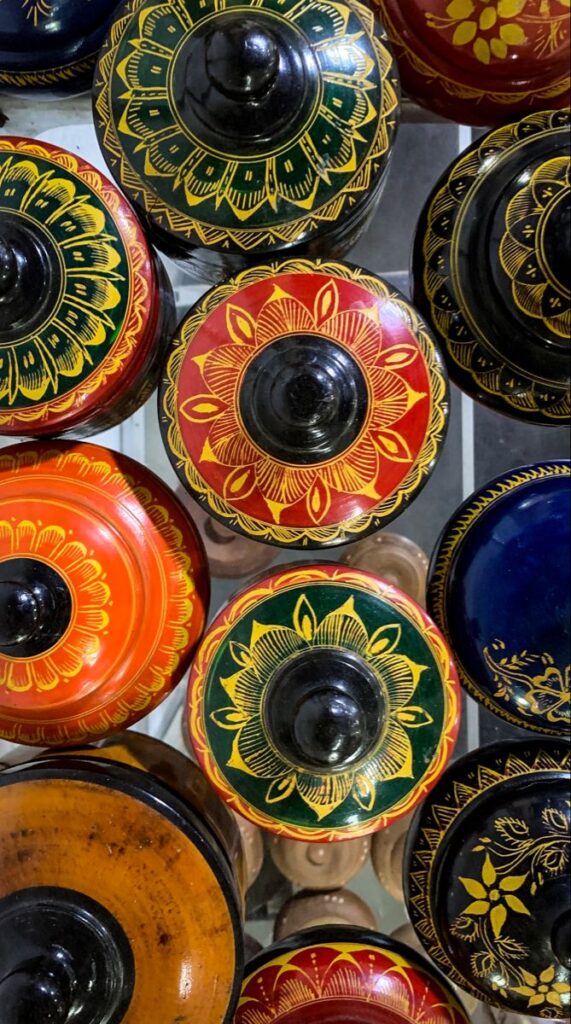
Lacquer Work and Decorative Arts
Traditional decorative arts include:
- Lacquer craftsmanship
- Painted ornaments
- Handmade cultural souvenirs
- Artistic ceremonial items
These reflect local artistic creativity.
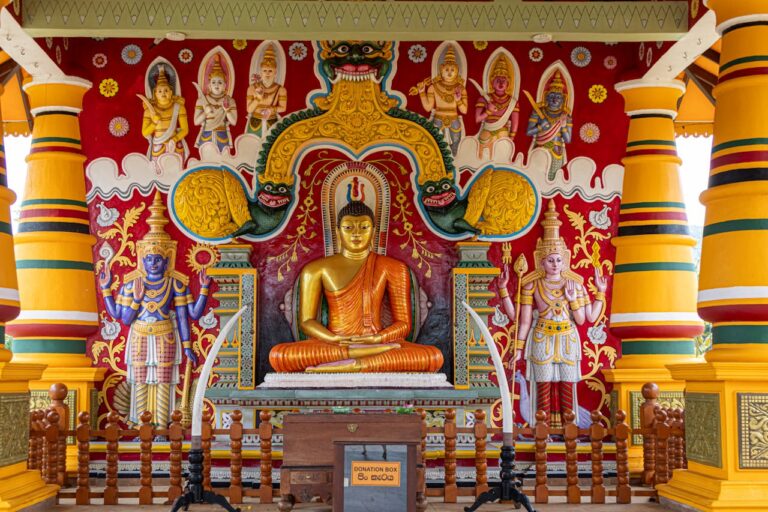
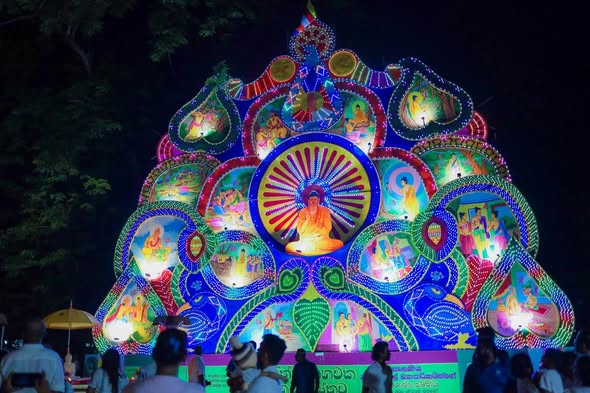
Temple Art and Murals
Sri Lanka’s sacred art heritage includes:
- Temple paintings
- Wall murals
- Religious carvings
- Sacred iconography
Ancient temples preserve remarkable artistic storytelling traditions.
Why Traditional Arts Matter
Sri Lankan handicrafts preserve cultural memory, artisan livelihoods, and artistic identity. Supporting these traditions helps protect heritage while promoting sustainable tourism and local craftsmanship.